


Basivertebral Nerve Ablation – Intracept Procedure
Background – Chronic, axial (midline) low back pain can be very difficult to accurately diagnose and treat leading many patients to be defined as suffering from non-specific, low-back pain. Chronic low back pain treatment has focused on the intervertebral disc for years. Unfortunately, treatments aimed at the vertebral disc have not produced great results. The vertebral endplates provide nutritional support for the disc and structural support for the spine. The endplates are densely innervated by the Basivertebral Nerve located within the vertebral body. Mechanical loading can damage the vertebral endplate resulting in swelling in the vertebral endplate that can be seen on MRI. Recent research indicates that the vertebral endplates can generate significant pain.
The Intracept Procedure – The Intracept procedure is a minimally invasive, outpatient procedure targeted to ablate or destroy the Basivertebral Nerve in the vertebral body to significantly improve chronic, axial low back pain. The procedure maintains the normal spine architecture and does not use an implant. Level 1, randomized, double-blind, sham-controlled clinical trials demonstrate the safety and effectiveness of the Intracept procedure with the procedure leading to statistically significant pain relief and functional improvement.
What is Vertebrogenic Pain?
Vertebrogenic pain is a distinct type of chronic low back pain caused by damage to vertebral endplates, the tissue that covers the top and the bottom of each vertebral body and separates it from the disc. Disc degeneration, and the wear and tear that occurs with everyday living, produces stresses on the endplates that damage them, leading to inflammation and vertebrogenic pain. The basivertebral nerve (BVN), found within the vertebrae, carries pain signals from the inflamed endplates to the brain.
How Do Patients Describe Vertebrogenic Pain?
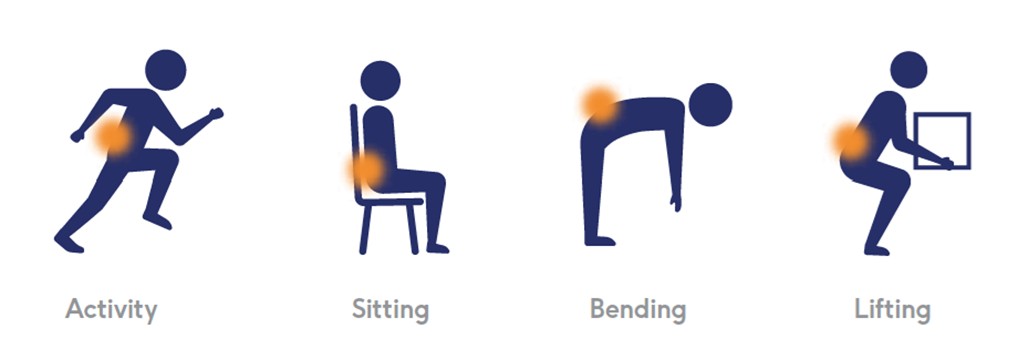
The disc and endplate are both part of the anterior spinal column and produce similar low back pain symptoms. However, endplate pain is associated with distinctive changes on routine MRI called Modic changes. Patients who find relief from the Intracept Procedure often describe pain in the middle of their low back that is made worse by physical activity, prolonged sitting, and bending forward or with bending and lifting.1
How is Vertebrogenic Pain Treated?
The basivertebral nerve (BVN) enters the bone at the back of the vertebral body (the bones in your spine) and “branches” to the endplates (that are located at the top and the bottom of each vertebral body). When endplates are damaged, these nerve endings increase in number and “pick up” pain signals that are then sent to the brain through the BVN. The Intracept® Procedure relieves vertebrogenic pain by heating the basivertebral nerve (BVN) with a radiofrequency probe to stop it from sending pain signals to the brain.
How does the Intracept® Procedure Work?
The Intracept Procedure is a minimally invasive, implant free procedure that preserves the overall structure of the spine. The Intracept Procedure is a same-day, outpatient procedure. Patients are under anesthesia, and the procedure generally lasts an hour. The procedure is FDA-cleared and is proven in multiple studies to be safe, effective, and durable. 2,3
How Long Does Pain Relief Last following the Intracept® Procedure?
Clinical evidence demonstrates the majority of patients experience significant improvements in function and pain 3-months post procedure that are sustained more than 5 years after a single treatment. 2
How Do I Know If I’m a Candidate for Intracept®?
The Intracept® Procedure is indicated for patients who have had:
- Chronic low back pain for at least six months,
- Who have tried conservative care for at least six months, and
- Whose MRI shows features consistent with Modic changes – indicating damage at the vertebral endplates has led to inflammation.
The Intracept Procedure, as with any procedure, has risks that should be discussed between the patient and medical provider.
[1] Koreckij T, Kreiner S, Khalil JG, Smuck M, Markman J, Garfin S. Prospective, randomized, multicenter study of intraosseous basivertebral nerve ablation for the treatment of chronic low back pain: 24-month treatment arm results. NASSJ. Published online October 26, 2021. DOI: https://doi.org/10.1016/j.xnsj.2021.100089.
2 Fischgrund J, Rhyne A, Macadaeg K, et al. Long-term outcomes following intraosseous basivertebral nerve ablation for the treatment of chronic low back pain: 5-year treatment arm results from a prospective randomized double-blind sham-controlled multi-center study. Eur Spine J. 2020;29(8):1925-34. doi.org/10.1007/s00586-020-06448-x
3 Relievant data on file as of January 2023.